
Every roastery has someone who seems to know when something is different before anyone else does. They hear a change in the machine, notice a shift in the coffee, or recognize that a batch is heading somewhere unexpected before the change is obvious.
That kind of experience is valuable. It is also difficult to scale when too much of the roasting program depends on one person carrying the knowledge.
At Loring, we believe great roasting technology should make expertise more useful, not less necessary. The same is true of education. The goal is not to turn every operator into the same roaster. It is to give teams a shared understanding of the machine, the coffee, and the reasoning behind the decisions they make.
Experience Is Most Valuable When It Can Be Shared
Much of roasting expertise develops through repetition. An experienced operator has seen the same coffee behave differently, worked through production problems, tested profiles, cupped the results, and built an internal library of cause and effect.
The challenge is that this knowledge can remain invisible to everyone else. A new roaster may learn which button to press or which profile to select without understanding why the profile was developed that way. They can reproduce the process, but they may not yet know how to respond when the process changes.
That becomes a larger risk as a roastery grows. More operators, additional shifts, new coffees, and greater production volume create more moments when someone has to make a judgment call.
Strong roasting teams address that by turning individual knowledge into shared knowledge.
Training Should Explain the “Why,” Not Just the “How”
Operating a coffee roaster and understanding a coffee roaster are different things.
A training program can show someone how to charge a batch, load a profile, or discharge coffee. Those skills matter, but they only cover the mechanical layer of production. A more complete education helps the operator understand what the machine is doing and why a particular response might make sense.
That is the philosophy behind Loring’s education and training programs. Current offerings include advanced maintenance and diagnostics trainings, and instruction with experienced Loring Roast Masters and Certified Trainers around the world.
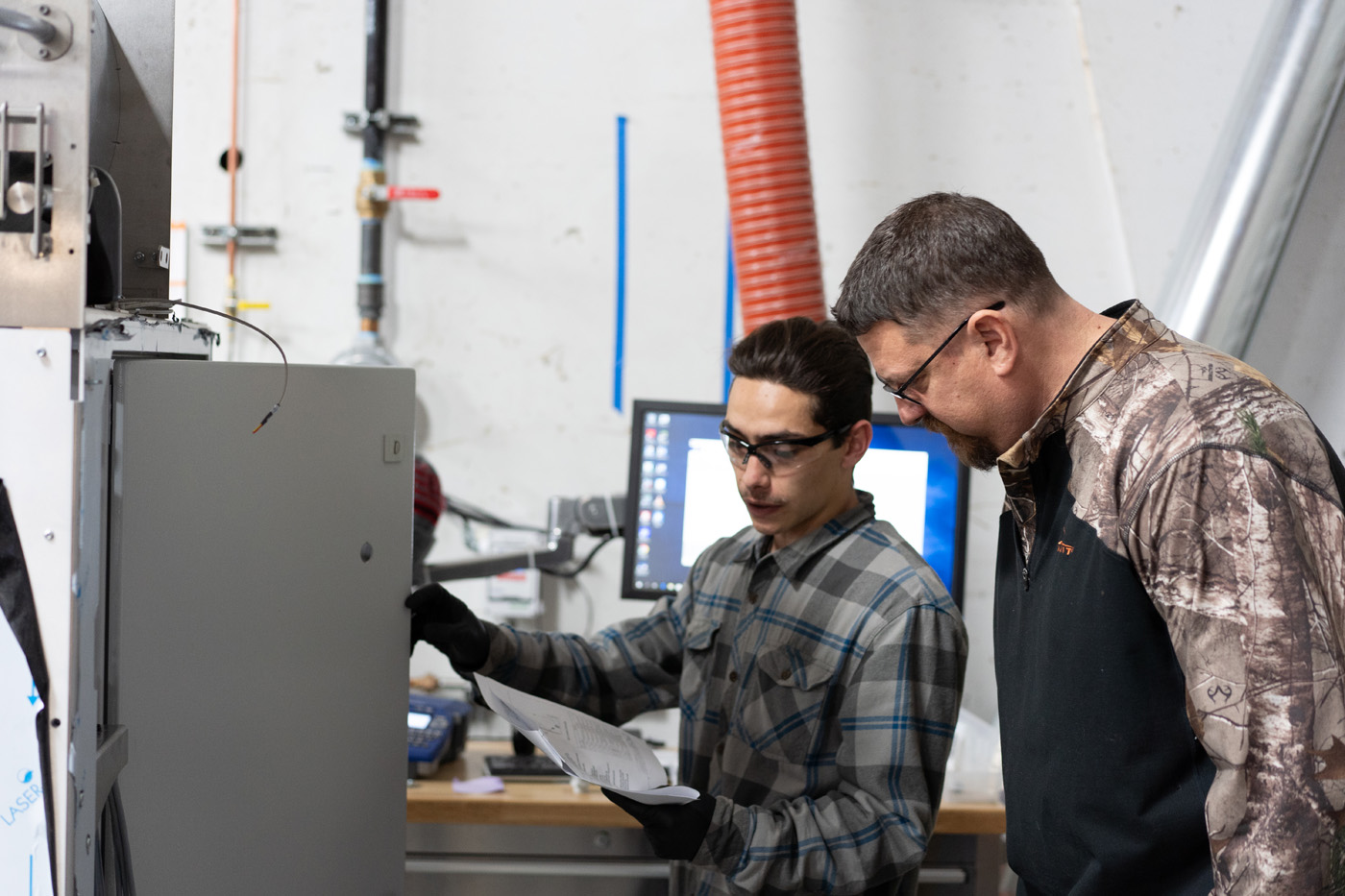
For example, recent Loring Roast Master training with Rob Hoos, combined heat-transfer principles, machine operation, rate of rise, automation, profiling, cupping, maintenance, and production planning. The objective is not simply to teach someone how to operate a Loring. It is to help them understand the relationship between an adjustment at the machine and the result they eventually taste.
That deeper understanding gives an operator more confidence when conditions change.
A Shared Language Makes Better Teams
Training also gives roasting teams a common vocabulary.
Without it, two people can look at the same roast and describe the problem in completely different ways. One person may focus on the curve, another on the color, and another on the cup. All three may have useful observations, but the team still needs a shared framework for putting those observations together.
A stronger roasting culture connects those pieces. The profile shows what happened during the roast. The machine provides information about how the process behaved. Color and other measurements add context. Cupping tells the team whether the coffee reached the intended sensory result.
When everyone understands how those tools relate to one another, quality conversations become more productive. Instead of simply saying, “That batch feels off,” the team can begin narrowing down what changed and why.
Technology Can Help Preserve What the Team Learns
Shared knowledge also needs somewhere to live.
Roast profiles, production standards, maintenance procedures, machine documentation, troubleshooting information, and training resources all become more valuable when teams can access them consistently. Loring supports that process through tools such as Roast Architect, its customer Knowledge Base, and technical support resources.
Loring’s Knowledge Base gives owners access to service and maintenance information, manuals, installation guides, and answers to common support questions. That gives operators a place to start when they need information without relying entirely on whoever happens to be in the building that day.
Roast Architect serves a different but related purpose. It allows teams to create, edit, upload, download, and archive roast profiles, making profile knowledge easier to preserve and share across compatible Loring systems.
Each tool addresses a different part of the same problem: useful knowledge should remain available to the team.
Better Training Creates More Freedom, Not More Rules
Standardization sometimes sounds like the opposite of creativity. In practice, a strong foundation often creates more room for experimentation.
When operators understand the equipment, know the established profiles, and share a common approach to quality, they can make changes more intentionally. They are not guessing at how the system works while simultaneously trying to develop a coffee.
That foundation also makes mentorship easier. An experienced roaster can spend less time correcting routine execution and more time helping newer team members understand sensory goals, profile development, and more complex production decisions.
The outcome should not be a team of operators who all roast exactly the same way. It should be a group of people who understand the same system well enough to contribute intelligently to it.
Expertise Should Become Stronger as the Team Grows
There will always be value in the person who has spent thousands of hours behind a roaster. Experience cannot be downloaded or automated.
But the strongest roasting programs do not force every generation of operators to relearn the same lessons from scratch. They document what they know, teach the reasoning behind their decisions, and give people opportunities to practice those ideas in a real roasting environment.
That is why Loring sees education as part of the broader ownership experience rather than something that ends when a machine is installed. A roaster can evolve. A team can evolve. The way a company thinks about coffee should evolve too.
The best roasting knowledge does not become less valuable when you share it. It becomes more capable of shaping what the team does next.
Explore Loring Education and Events to learn about Roast Master classes, maintenance training, Certified Trainers, and upcoming programs.